
Most of Lawson’s time in the Tahoe National Forest centered around the ranger station in the small town of Sierraville, though he covered quite a lot of ground, from Gold Lake in the north, Mount Rose in the west, down to Tahoe City toward the south and to Downieville to the west. All of this was on horseback of course, mostly following streams or going overland. It comes as no surprise that a group of adventurous young men all by themselves in the woods got up to some shenanigans… From his description of arriving on the job in 1919:
Though the Forest Service at that time boasted a few well educated men, most of the rangers were timber crew foremen, ramrods for cattle outfits, maybe mine bosses, all with the urge to do something a little better. Most of them, like I, had a questionable grammar school diploma, but what a rough, tough, capable bunch they were. The Bear and I were the only rookies, but from the first we were treated like equals and veterans…. That night after dinner we went out on the town en masse. The events of that night, the last night before prohibition went into effect, probably are best not recorded. From that day until the old lad with the scythe makes a successful pass at me, under the thin veneers that I have collected since, I will always be a Forest Ranger.
I drove up to Sierraville on a Sunday morning in late spring. Sierraville is a spectacular spot, a wide open grassland surrounded by mountains on all sides. The “downtown,” such as it is, is remarkably similar to what Grandaddy probably saw a century ago. Here’s a photo I took of the main intersection (of highways 49 and 89), followed by photo of the same spot in 1902.


The ranger station was an old house on the edge of town:
It was one big room smelling highly of frying steak, baking biscuits, pipe smoke and a rich overtone of sweaty saddle blankets. The room was littered with fire tools, riding and pack saddles and bedrolls (sleeping bags were not in general use at that time), bedrolls usually consisting of a couple of blankets wrapped up in a tarp. On the wall were tacked maps and hanging on nails were spurs, bridles, six-shooters, hats and clothing.
I stopped by the current Sierraville ranger station, which unfortunately was closed on Sundays, and I do not think it is in the same location as a hundred years ago, based on his description. I peered through the windows and it looks like it was last updated in the 1970s. But the views across the valley are grand, and probably not much changed with time:

My main inspiration for this short trip was the following segment, about traveling home from Sierraville to Loomis on horseback, through the high mountains in the snow.
My work finished for the season, I started back to Loomis. Instead of following the roads, I decided to go straight across country. I started up the Webber Lake trail when I could see to travel. By the time I arrived at the lake it was snowing. There was a cabin near the lake and a dim road leading around it in the general direction I thought I should be going. The snow increased, and within an hour all trace of a road and directions had disappeared. Only thing I was sure of was that I didn’t know which way I should go nor how to find out. I did the only thing that I could: buttoned up my old navy pea coat and kicked Buck in the ribs, thinking that he would take me back to Sierraville. I forgot that Buck didn’t have horse sense, so he plodded on hour after hour. Nothing but swirling snow and trees. We jumped one enormous buck with antlers like a lightning-struck juniper. Just about twilight I noticed that we had been going downhill, and the snow was less deep. Then I saw that we were following a dim road which soon entered a road that had been grade. The snow had turned to rain, and it was getting as dark as the inside of the devil’s stomach. Having no idea where I was, without enthusiasm, thinking about making camp — I believe I had some bacon and rolled oats for Buck — then I saw a light ahead, more lights, and soon I was in front of the old hotel at Graniteville, only about seven miles as the arrow travels to Alleghany where I was born. The hotel was owned by an old friend of dad’s and he received me as a long lost son.
My hope was to come late enough in the season that the roads would be open and passable to cars, as I have no horse of course (nor a snowmobile for that matter), but early enough in the season that there would still be thick snow on the ground. The plan was to follow the old Henness Pass road past Webber Lake as far as I could get in my Crosstrek, then hike out in the snow. Here’s a picture of the road disappearing under snowpack, a few miles past Webber Lake. In summer, it could be fun to drive the whole route from his story, there is a network of forest roads that should make it as far as Graniteville…

I did get out and hike aways off the road, but did not get as far as I hoped. The snow was crusted over the top and melting underneath, which made for some unexpected shifts, and the constant threat of suddenly finding oneself up to the hip in a wet snowdrift. I rather slowly picked my way through the woods in my snowshoes, which was lovely but not spectacular.

My best photos are from the road up to Webber Lake, before hitting the snowpack – not exactly the wilderness, but expansive Sierra vistas nonetheless.


Later in the afternoon I drove back down into town, out of the snow, to visit the hot springs in Sierraville. Nowadays the hot springs are a clothing-optional hippie hideaway of sorts, but the spot has been operated as a resort of one kind or another since the 1880s. It’s an amazing location, right on the edge of the valley nestled against the base of the mountain. Grandaddy seems to have spent some time there looking for romance in his earlier years in the forest service:
When I rode into Sierraville, there seemed to be a dearth of unattached lassies. There were two biscuit shooters working at Campbell Hot Springs, about three miles from the ranger station. One was a cute little Irish sagehen from Nevada. The other was a long, lanky jaybird type with the sex appeal of an old main salamander in hibernation on a January rainy day. About once a week, if Bonta was back from a trip, we would notify the fire dispatcher at Truckee where we could be located, then ride over to the Hot Springs for a good soaking bath and dinner. The principal motive, of course, was sparking the girls when they got through work. Before we left the Ranger Station we would take one shot with our sixshooters at a target on the door of our Chick Sales. The one coming closest to the bullseye squired the Colleen for that evening. So much for romance. Not of much historical value, but still pleasant to the memory.
The old lodge is still standing, and you can eat your dinner a cozy room with an old stone fireplace and wood stove that probably hasn’t changed much in 100 years.

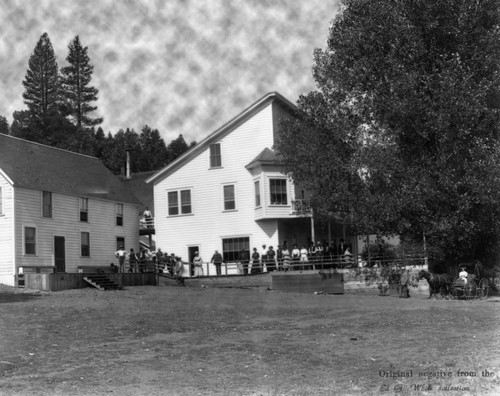
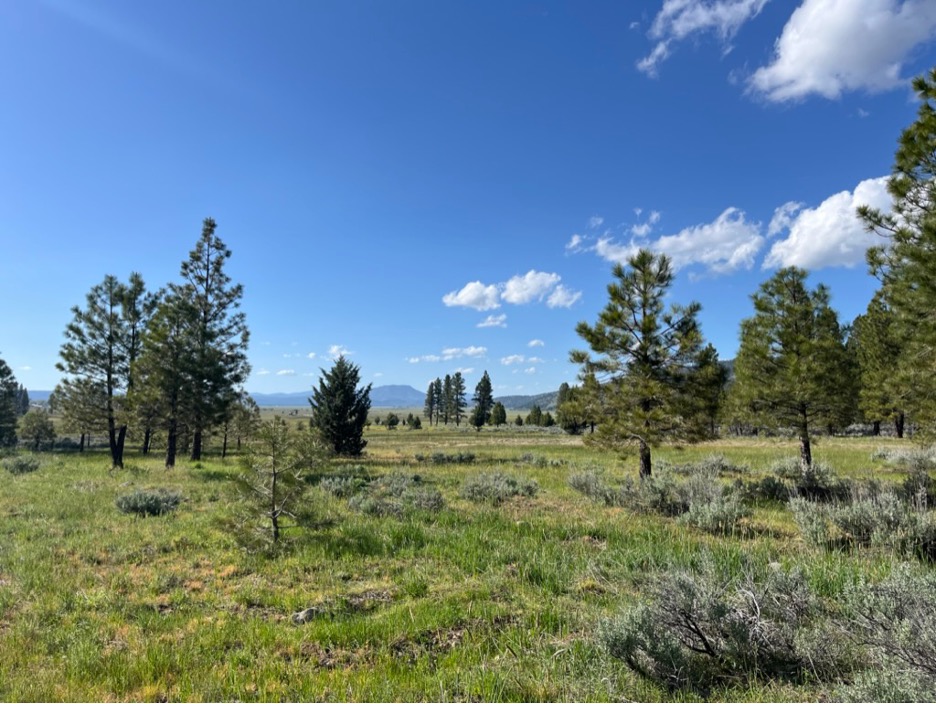
I do wonder what they would have worn for a soak in a hot spring in the 1920s. The water is sulfurous and leaves a mineral residue, but the pools are really an excellent soaking temperature, ranging from 98 to 108 degrees, with cold plunges for in between. The pool nearest the source of the hot spring is only a few hundred yards from the main lodge, right on the edge of the open valley. You can’t take pictures at the pools, but I did take a picture out towards the valley from just a little ways away.
Then I got back in my trusty little Crosstrek and drove back to San Francisco. I got home with a little bit of light still in the sky!
 Lhbcentennial.com
Leave a comment